Everyone knows that moment.
You pull freshly washed clothes out of the machine, and before even looking at them, you smell them first.
And somehow, that smell changes everything.
A detergent can clean perfectly, but if the fragrance disappears too quickly, people often feel disappointed without really knowing why. On the other hand, when clothes keep that fresh scent for days, the whole product suddenly feels “better”.
That’s why fragrance became such a huge part of modern detergents.
But here’s the interesting part: making a scent last on fabric is actually incredibly difficult.
Perfume Was Never Designed to Survive Laundry
This is something most people never think about.
Fragrance molecules are naturally volatile. That’s literally the reason we can smell them in the first place — they evaporate into the air.
The problem is that laundry conditions are brutal for perfume.
Think about what happens during a wash cycle:
It’s almost the perfect environment to destroy delicate fragrance notes.
Without protection, a large part of the perfume would disappear long before the clothes even finish drying.
So the industry had to find another solution.
That’s Where Encapsulation Changed Everything
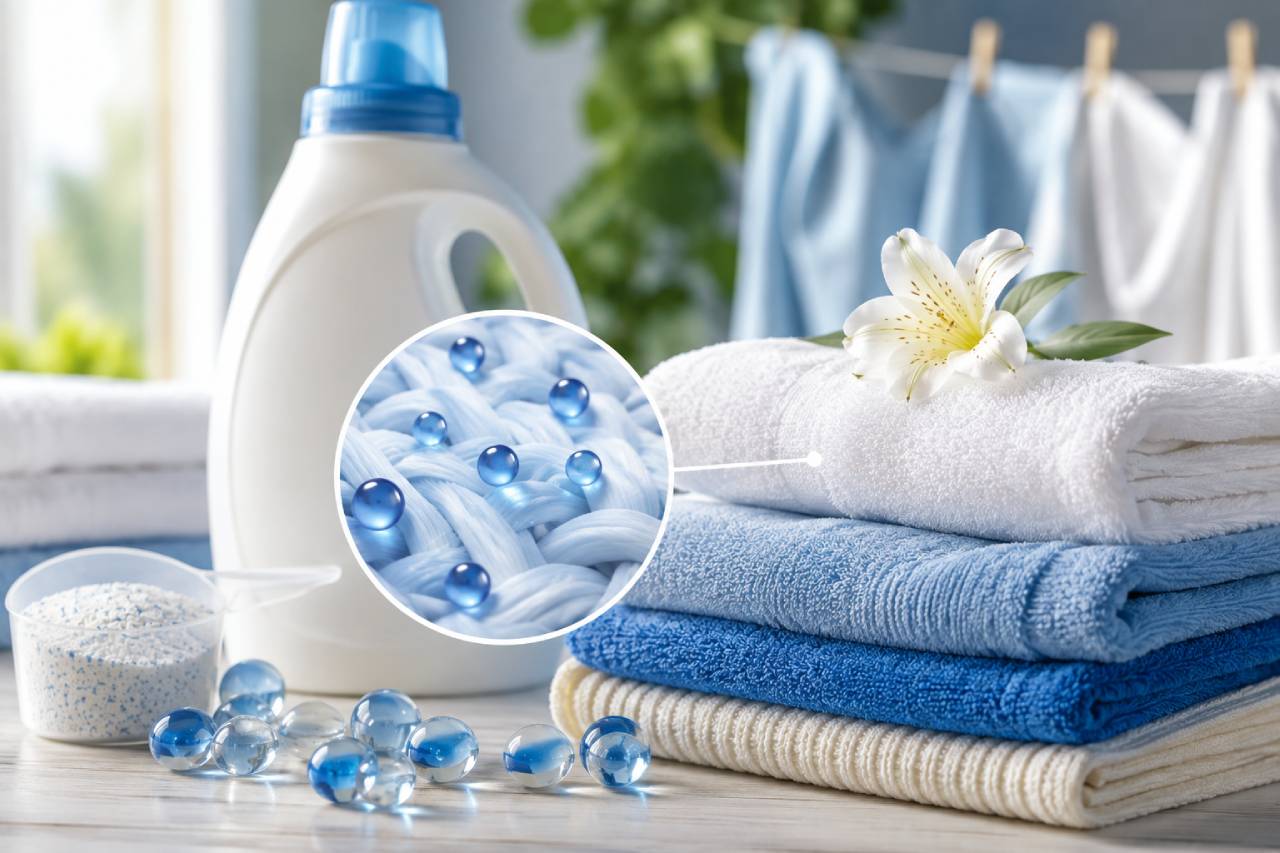
Instead of letting fragrance escape immediately, formulators started protecting perfume inside tiny structures — basically small invisible capsules.
The idea sounds simple now, but it completely changed laundry products.
Because suddenly, fragrance could be released slowly instead of all at once.
That’s why some clothes still smell fresh :
Those little “bursts” of scent usually come from encapsulated fragrance systems.
And honestly, consumers became obsessed with that experience very quickly.
People Don’t Just Want Clean Clothes Anymore
This is probably one of the biggest changes in detergent products over the last years.
Cleaning performance still matters, obviously. But sensory experience became just as important.
People now expect:
In many markets, detergents focused on “lasting freshness” continue to grow faster than standard products.
And younger consumers especially tend to associate fragrance with product quality. If the scent disappears too quickly, many automatically assume the detergent is less effective — even when the cleaning itself is perfectly fine.
The Challenge Is Making Fragrance Last… Without Overdoing It
This is where things get complicated behind the scenes.
Because creating long-lasting fragrance is not just about adding more perfume.
Actually, too much fragrance can become unpleasant very fast.
The real work is finding the right balance:
At the same time, the capsules themselves need to behave correctly.
Some need to survive the wash cycle.
Some need to break gradually over time.
Some react to friction when clothes move.
And all of this has to happen without affecting the detergent texture, stability, or appearance.
That’s why fragrance encapsulation is much more technical than people imagine.
The Technology Quietly Became Smarter
A few years ago, fragrance delivery systems were relatively basic.
Now, things are much more advanced.
Different technologies are used depending on the product:
Some are designed for fabric softeners. Others work better in liquid detergents or concentrated formulas.
And recently, sustainability became a major topic too.
A lot of companies are now trying to move toward biodegradable encapsulation systems because consumers are paying more attention to environmental impact.
So the goal isn’t only “make fragrance last longer” anymore.
Now it’s also:
“How do we make it perform well and make it more sustainable?”
Fragrance Became Part of the Emotional Experience
What’s fascinating is that detergent fragrance is no longer just functional.
It became emotional.
People connect certain laundry scents with:
That emotional connection is incredibly powerful in consumer products.
And honestly, that’s one of the reasons fragrance innovation keeps moving so fast in the detergent industry.
Because consumers remember how products make them feel.
Where Things Are Going
The market is clearly moving toward:
And the competition is intense.
Today, brands are not only competing on cleaning performance anymore. They’re competing on experience.
How long does the scent last?
How does the fabric smell tomorrow?
How does it feel when you open your closet?
Those details matter more than ever now.
Final Thought
Most people think detergent perfume is just fragrance mixed into a formula.
In reality, there’s a lot happening behind that fresh smell.
Tiny capsules. Controlled release systems. Stability challenges. Sensory engineering.
All of it working quietly in the background so that a shirt hanging in your closet still smells fresh days later.
And honestly, once you realize how difficult that is, you start looking at detergents very differently.